
A Realm Aging, A Vitality Fading: Japan’s Senior Population Peaks at 29.6%
Oct 9, 2026
Japan’s aging population continues to grow, with people aged 65 and older accounting for 29.6% of the population, a record high and the highest share among countries with populations of more than 40 million. The figure is projected to rise to 38.7% by 2070.
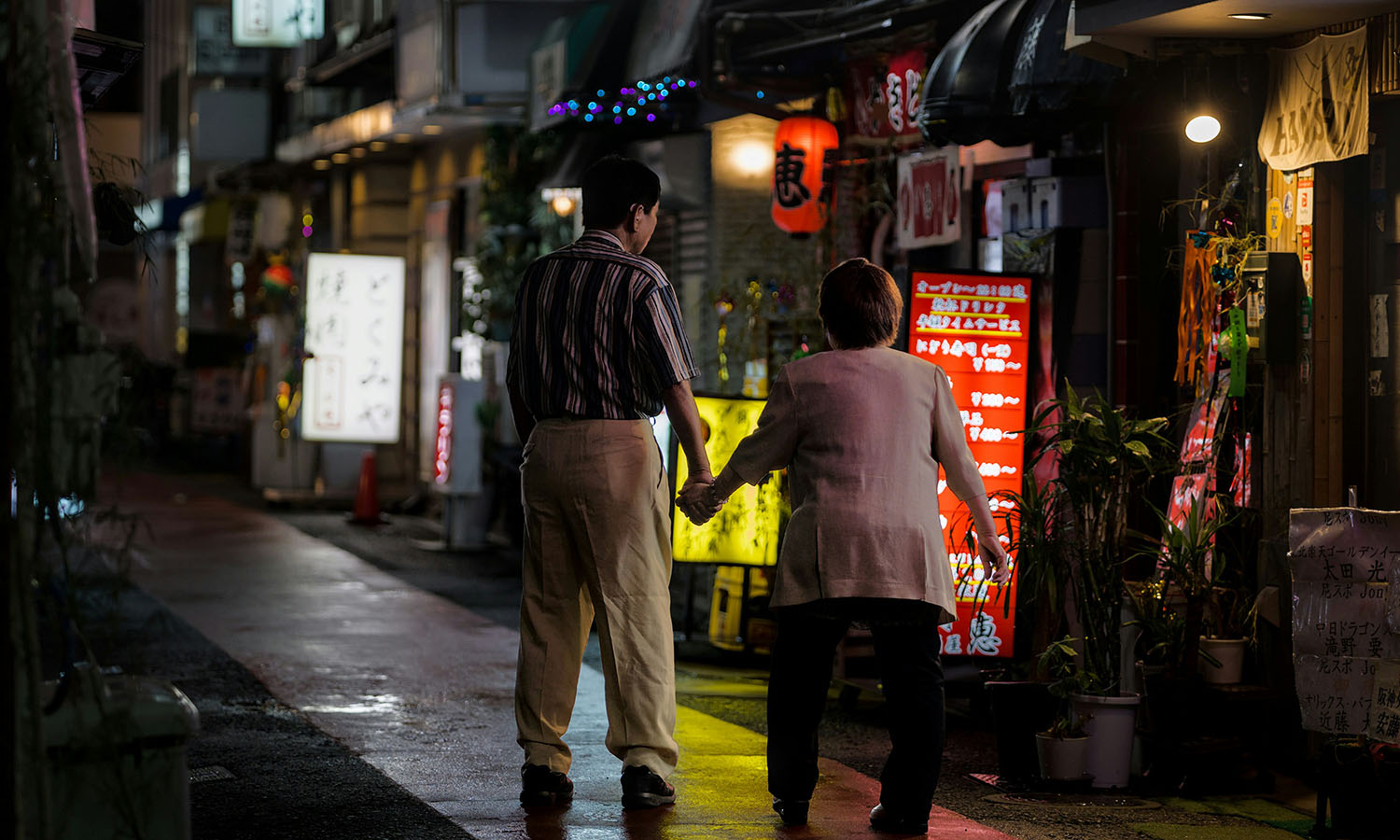
TOKYO, JAPAN (MERXWIRE) – Japan’s aging population is increasingly visible in everyday life, with older people continuing to work in supermarkets, retail stores and service industries. As life expectancy rises and birth rates remain low, the country’s demographic structure is changing, affecting not only family life and retirement planning but also workforce needs and business operations. According to the latest data from Japan’s Statistics Bureau of the Ministry of Internal Affairs and Communications, the number of people aged 65 and older reached 36.24 million in 2026, accounting for 29.6% of the total population, a record high. Japan ranked first among 39 countries with populations of more than 40 million, recording the highest proportion of elderly people.
The number of people aged 65 and older increased by 20,000 from the previous year, while their share of the total population rose from 29.4% to 29.6%. Among older age groups, 21.68 million people were aged 75 and older, representing 17.7% of the population. Those aged 80 and older totaled 12.88 million, or 10.5%. These figures show that Japan’s aging population is not only large but is also shifting toward older age groups. The trend is expected to increase demand for healthcare, long-term care, retirement support and community services, making the quality of life of older people an increasingly important social issue.
In comparison with other major economies, Japan’s elderly population accounted for 29.6% of its total population, higher than Italy at 25.6%, Germany at 24.2% and France at 22.9%. Although these European countries also face challenges related to low birth rates, longer life expectancy and population aging, Japan’s proportion remains significantly higher. Population aging is becoming a shared long-term challenge among developed economies. However, with nearly three in every 10 people in Japan aged 65 or older, the country faces mounting pressure to adapt its social systems and public services.
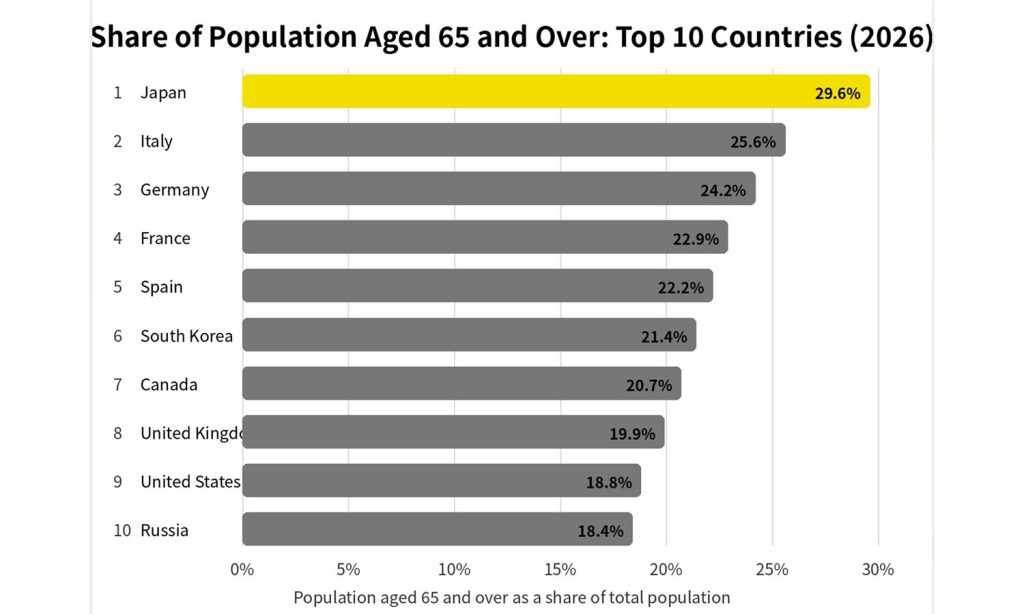
Japan’s global ranking may change in the coming decades as other countries experience faster population aging. According to population projections, the proportion of people aged 65 and older in Japan is expected to reach 38.7% by 2070, placing the country third globally. South Korea is projected to rank first at 46.6%, followed by China at 39.9%. Japan’s projected rate would still exceed those of Italy at 36.1% and Germany at 29.7%. A lower global ranking would therefore not mean that Japan’s aging challenge had eased. Instead, it would reflect a broader demographic shift affecting an increasing number of countries.
Looking at Japan’s domestic demographic outlook, the proportion of people aged 65 and older is projected to rise from 29.6% in 2026 to 34.8% in 2040 and 38.7% in 2070. By then, approximately one in every 2.6 people in Japan will be aged 65 or older. The proportion of people aged 75 and older is also projected to reach 25.1%, meaning roughly one in four people will be at least 75 years old. As the elderly population grows, Japan will need to address not only the increasing number of retirees but also healthcare needs, daily living support and the long-term sustainability of its social security system.
Population aging is also reshaping Japan’s labor market. In 2025, the number of employed people aged 65 and older reached 9.43 million, marking a record high and the 22nd consecutive year of growth. They accounted for 13.8% of all employed people aged 15 and older, or approximately one in every seven workers. The employment rate was 54.5% among people aged 65 to 69, 36.2% among those aged 70 to 74, and 12.6% among those aged 75 and older. All three age groups recorded their highest employment rates on record. The figures suggest that some older people are choosing to remain in the workforce after retirement to maintain their income, daily routines and social connections. At the same time, businesses are increasingly challenged to make effective use of experienced older workers as the labor force changes.
An older Japanese worker who continues to work said, “After retirement, staying at home for long periods can feel lonely, and life can lose its sense of purpose. As long as my health allows, I want to keep working. It provides additional income, gives me opportunities to interact with other people and helps me maintain a regular routine.” For some older adults, employment offers more than financial support. It can also provide a sense of purpose, social interaction and structure in daily life. However, continued employment depends on factors such as health, working conditions, working hours and family responsibilities. Creating suitable opportunities for people with different physical abilities and personal needs will therefore be important.
A business owner who provides employment opportunities for older people said, “Older employees may not have the same physical strength as younger workers, but they have accumulated considerable work experience. With adjustments to their duties and working hours, they can still make valuable contributions. We assign tasks according to each employee’s physical condition so they can continue working.” For employers, older workers can contribute practical knowledge, familiarity with their jobs and experience in handling workplace situations. Adjusting duties, offering shorter working hours and improving workplace conditions may help businesses retain experienced employees while reducing physical strain. However, sustainable employment for older people also requires appropriate pay, workplace safety and fair labor conditions.
As people aged 65 and older account for nearly 30% of Japan’s population, aging is becoming more than a demographic issue. It is increasingly affecting labor supply, corporate recruitment, retirement planning and social security. Japan will need to balance older people’s continued participation in society and the workforce with their quality of life and access to adequate support. Although the country’s global ranking is projected to fall from first to third by 2070, the expected elderly population share of 38.7% indicates that Japan will continue to face profound demographic challenges, requiring long-term adjustments to labor policies, social welfare and support services for older adults.
More News





YOUR NEWS, OUR NETWORK.
Do you have Great News you want to tell the world?
Be it updates about your business or your community, you can make sure that it’s heard by submitting your story to our network reaching hundreds of news sites across 6 verticals.